Santiago's Story: A Big Smile and a Legacy That Moves Us Forward
Santiago loved soccer, music, and making people feel like they belonged. His courage during treatment for DIPG — and the legacy his family carries forward — fuels our work every day.

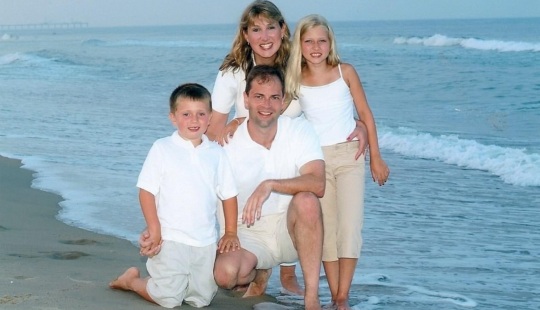
In March 2010, Mary Brandle sat in a hospital room and started doodling.
Christopher — her ten-year-old son, the kid everyone at his Montessori school called “The Mayor,” the kid who stepped in to lead the greeting and pledge of allegiance at his kindergarten graduation after another child got stage fright and never broke a sweat — was in his final days. He had medulloblastoma, an aggressive form of pediatric brain cancer that had resisted every treatment tried. Cisplatin. Carboplatin. Proton radiation at Massachusetts General Hospital. Six weeks in Boston with his Dad Brian by his side every day. Nothing held.
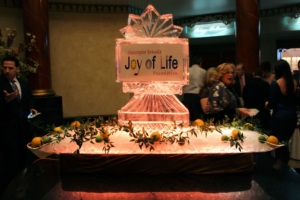
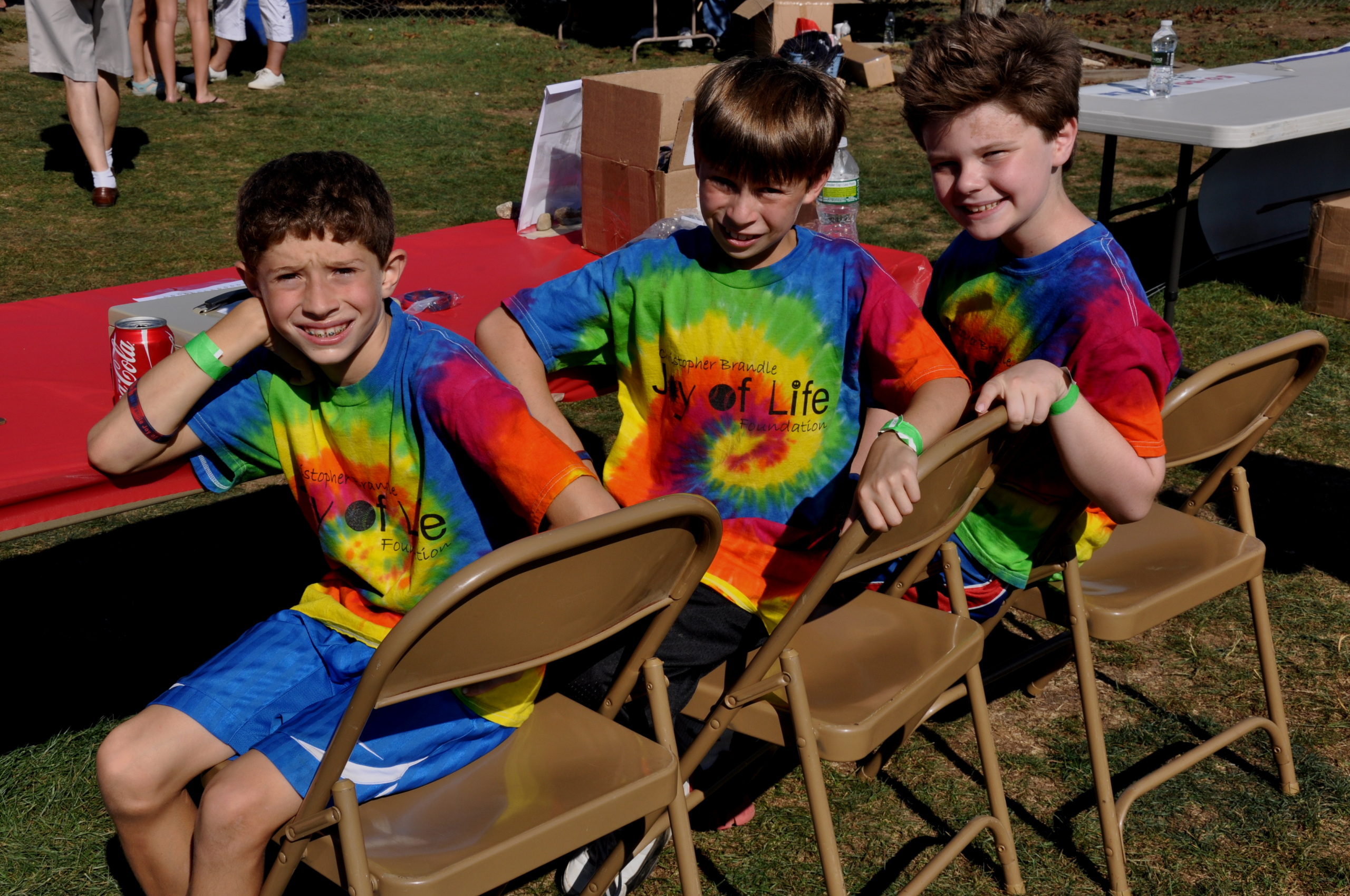
“We knew that regardless of whether he survived or he didn’t, we were going to do something to keep fighting,” Mary says. That night in the hospital, she sketched a logo — a sun, a baseball, and a hockey stick — and showed it to Brian. At that moment, the Christopher Brandle Joy of Life Foundation was born from a life taken too soon.

Sixteen years later, the Christopher Brandle Joy of Life Foundation has funded medulloblastoma research across three distinct grants, helped dozens of families facing the same diagnosis afford to keep the lights on, and become a lead launch partner for what is now one of the world’s most advanced pediatric brain tumor data networks. And Caitie — Christopher’s older sister — is a Harrison Scholar at the Medical College of Georgia, in her final year of medical school.
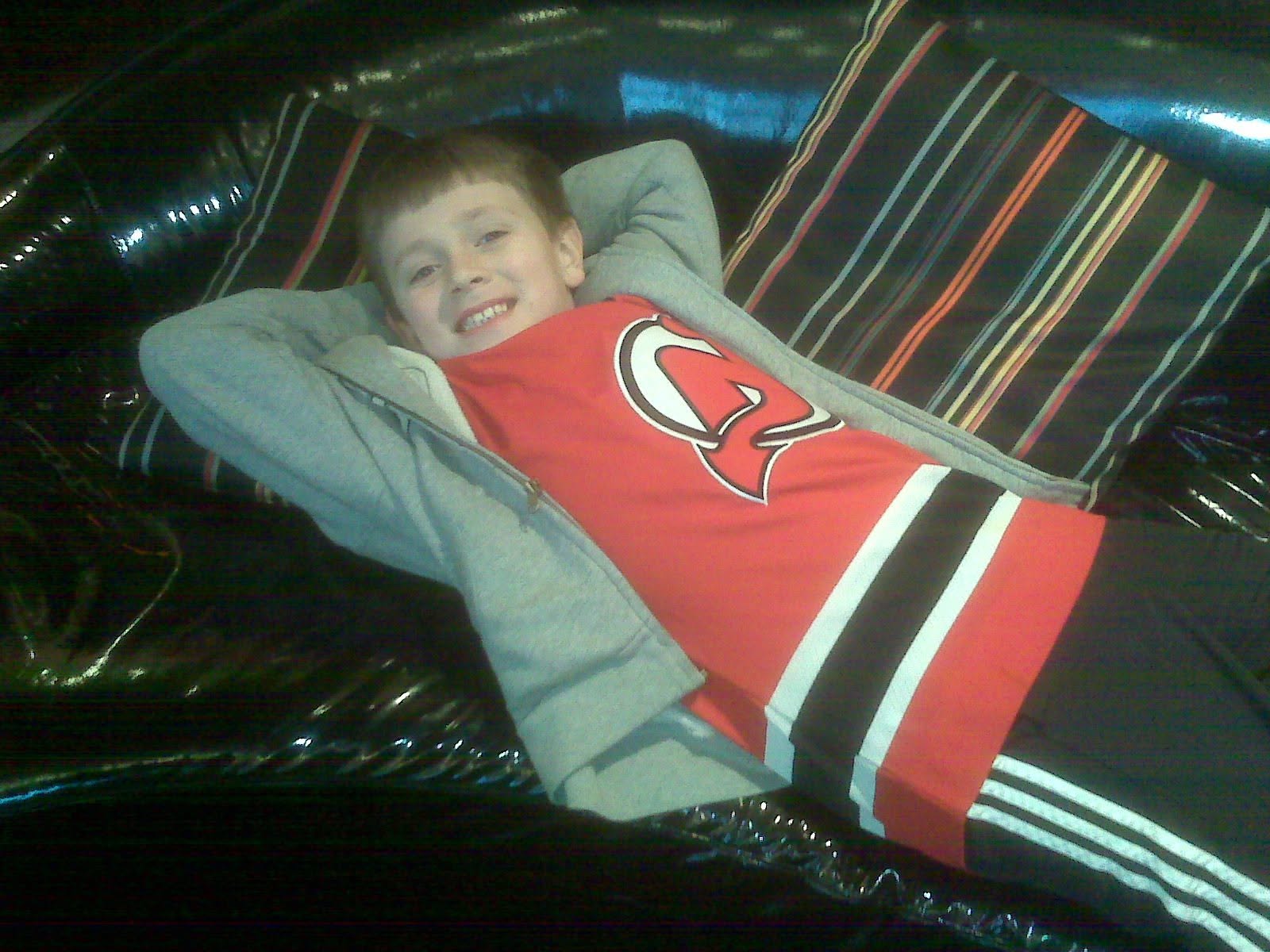
Christopher Brandle was, by every account from the people who loved him, exactly what the foundation’s name describes. He was born October 12th — two days after Caitie’s and Brian’s birthdays, close enough that Brian still calls the three of them “almost a trifecta.” He was the kind of kid who found fun in everything including mundane Saturday errands. He had a way of making those outings the best afternoon of the week. He was born a Yankees, a Devils, and a NY Giants Fan and a kid who spent hours in the backyard making his dad pitch to him until it was too dark to see the ball.
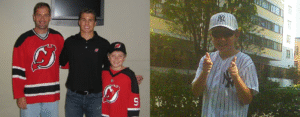
“He had this magnetic personality,” Brian says. “At Montessori they called him The Mayor, and then in elementary school it was just kind of clear — he was this magnet for other kids- they just gravitated toward him.“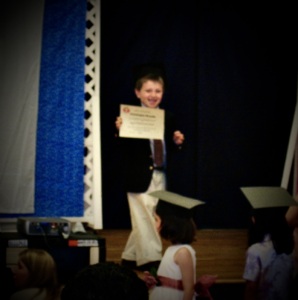
The logo Mary sketched that night in the hospital captured all of it: a sun, a baseball, and a name that didn’t once mention brain cancer. “The intent was never to represent pediatric brain tumors,” Mary says.“It was to represent him.”
The Christopher Brandle Joy of Life Foundation’s first major research investment with PBTF came in 2016: a grant to fund medulloblastoma resistance research at Dana-Farber Cancer Institute with Dr. Rameen Beroukhim.
“Every project we fund is personal for us. Christopher had a very resistant form of medulloblastoma — every treatment proved ineffective and his cancer continued to spread. So, when we found a project focused on resistant strains, it really resonated,” said Mary.
Then came the gene regulation in medulloblastoma study at Massachusetts General Hospital(2018), followed by the co-funded Phase-III SIOPE/CONNECT study (2023), which took the question a step further: not just survival, but what happens to children’s developing brains during and after treatment.
Now, in 2026, the Brandle’s have made two more commitments — projects that Brian describes as part of a larger shift in what the research landscape is becoming.
“We’re seeing a progression and an interconnection of researchers sharing data, and that’s what’s really exciting to us,” he says. “That’s really what is driving us now.”
The first: a lead launch commitment to the Children’s Brain Tumor Network’s medulloblastoma data infrastructure — the human backbone of the system that now powers a $50 million federal initiative to accelerate pediatric care across more than 200 hospitals nationwide.
The second: funding years two and three — a $200,000 commitment — of an Early Career Development Grant for Dr. Joelle Straehla at Seattle Children’s Hospital, whose research develops nanocarrier delivery systems that can bypass the blood-brain barrier and reach tumors where conventional therapies cannot — the exact failure point that defined Christopher’s treatment in 2009.
“Anything that can cross the blood-brain barrier and get to the site of the tumor — that’s huge,” Brian says. “That wasn’t something available in 2009 and 2010.”
Caitie Brandle didn’t go directly from losing her brother to deciding to become a doctor. That’s not how it worked, and she’s clear-eyed about that.
“It was kind of the opposite of an epiphany,” she says. “I really did struggle being in hospitals for a couple years after — all the memories it brought up.” She chose to confront it head-on by volunteering at Morgan Stanley Children’s Hospital, where Christopher had received most of his treatment. “The first day I was like, ‘this is immersion therapy.’ But it ended up being so rewarding. I made a lot of good memories in a setting I’d associated with very difficult ones.”
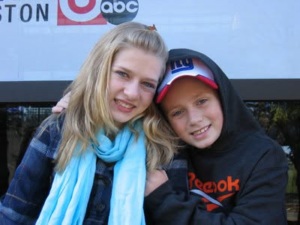
She went on to work in a cancer immunology research lab, where the science helped make cancer feel less like “this scary thing that took my brother” and more like something she could understand — and someday, help fight. She’s now a Harrison Scholar at the Medical College of Georgia, applying for residency programs.
“The grant process is just so grueling and so competitive,” she says of Dr. Straehla’s award. “You might be the smartest researcher with the most brilliant idea, but it can still be so difficult to get funding. So to see this type of support is just so exciting. It’s amazing to see a physician scientist so early in her career being awarded this opportunity.”
“What I hope people take from this,” she says of the Christopher Brandle Joy of Life Foundation’s story, “is that yes, its a tragedy, but you can go one of two ways with it. I feel like my parents have, thankfully for everybody, just chosen to make something so meaningful and so impactful out of something so tragic.”
Brian and Mary Brandle would say they didn’t have much choice. The logo was always right there.

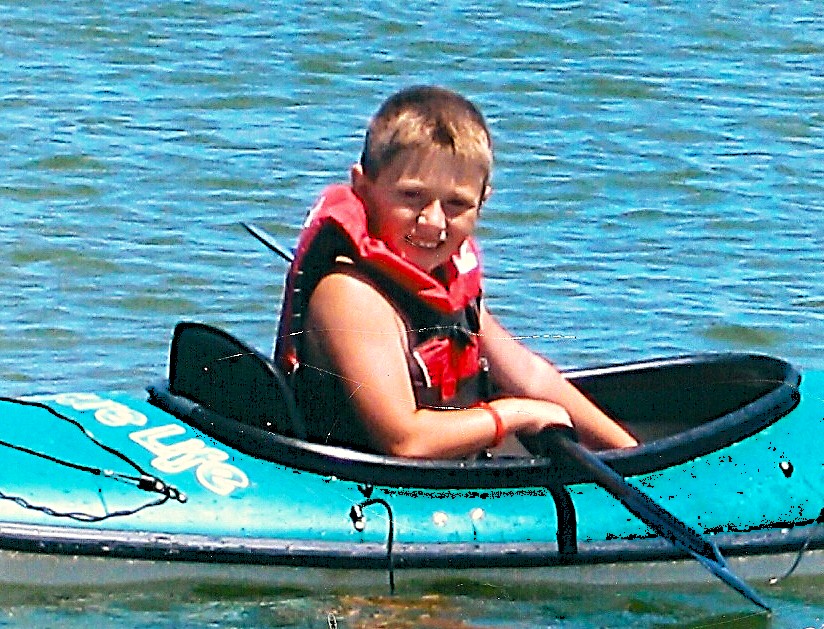
Santiago loved soccer, music, and making people feel like they belonged. His courage during treatment for DIPG — and the legacy his family carries forward — fuels our work every day.
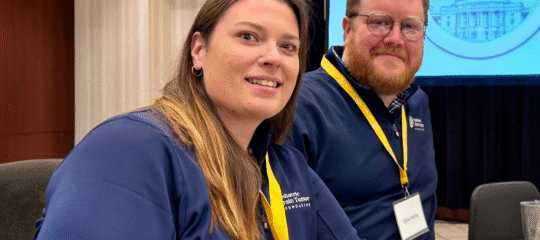
This Childhood Cancer Awareness Month, we're sharing the story of Mike Henry and Jenn Kelley, two colleagues at the Pediatric Brain Tumor Foundation whose paths first crossed when Mike's family needed the kind of help no parent should ever need. Now, they have spent the last five years turning that shared experience into support for other families.
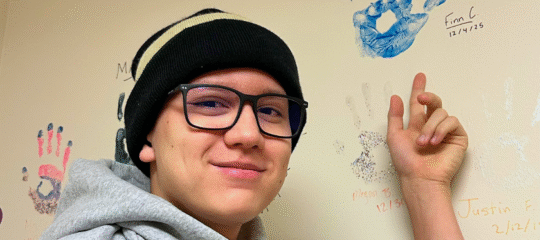
When Finn was diagnosed with a brain tumor, his family's world stopped. Learn how speaking up and finding the right support helped them navigate the journey.