
At first, there was nothing that seemed especially alarming – just a faint sense that something was slightly off.
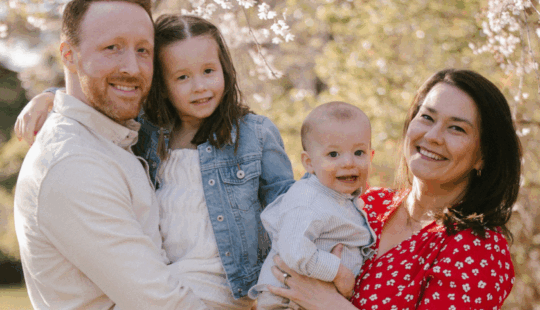
When Brittany’s daughter Alice was born small for her gestational age, she and her husband Dan chalked it up to genetics. As Alice grew, she reached milestones like rolling, crawling, and walking – just always on the later end of the typical age range. And because she never lost skills or regressed, her pediatricians weren’t overly concerned, so Brittany and Dan figured there was nothing to worry about.
“We always just thought it was because she was a little small,” Brittany says. “But eventually, even though doctors weren’t raising any red flags, Dan and I had this feeling something wasn’t quite right, so we kept asking questions and pushing for more answers. We just wanted to make sure everything was okay.”
That intuition proved critical.
Alice’s subtle delays, which also included an unusual gait, slight head tilt, mild balance issues, and chronic constipation, were early signs of something far more serious.
At age two, she completed six months of physical therapy for delayed walking and showed enough improvement for treatment to pause. About a year later, after Brittany and Dan pushed for further evaluation, their pediatrician referred them to orthopedics, where Alice underwent another six months of PT. When progress remained minimal, the orthopedist referred them to a neurologist who ultimately ordered an MRI of Alice’s brain and spinal cord to rule out any potential underlying neurological issues.
Following the MRI, Brittany and Dan were hoping for reassurance. But when the doctor entered the room where they were waiting, Brittany noticed the word “Oncology” embroidered on their coat. “That’s when I knew something was really wrong,” she recalls. The oncologist explained that Alice had a brain stem tumor and needed immediate surgery to relieve severe hydrocephalus – a dangerous buildup of fluid on her brain.
After the surgery, the doctor returned, this time accompanied by a social worker. They led Brittany and Dan into a room labeled “Serenity,” a name that felt painfully out of place. “It should really just be called the Bad News Room,” Brittany says. It was there the doctor told them, “It’s not good news,” explaining that their three-year-old daughter likely had just “six good months left,” and was not expected to live beyond a year.
The initial diagnosis was DIPG, an aggressive and incurable brain tumor. Brittany and Dan were shattered. To make things even more overwhelming, all of this came just weeks after the birth of their son Lewis. “I just kept thinking, my son is seven weeks old. He’s not going to remember his sister, and one day we will know him longer than we knew her,” recalls Brittany.
But even in that darkest moment, something shifted.
“Lewis came at just the right time,” Brittany reflects. “He forced us to feel joy. He’d give us a big goofy smile or do something adorable, and even when we were at that lowest place, he could warm our hearts. He kept us going.”
Eventually, Brittany and Dan received a second opinion, and a biopsy revealed a more hopeful – though still serious – diagnosis: a diffuse grade 2 brainstem glioma.
The tumor is still inoperable, still in a dangerous location, and something Alice will have to live with for the rest of her life. But the prognosis is better. Rather than being immediately life-threatening, this type of tumor is more likely to be a chronic condition that is managed over time.
“We celebrated that diagnosis with a bottle of expensive champagne,” Brittany says. “Not because it was good news exactly, but because it was better. We went from thinking we had six months left with our daughter to now thinking she might have a full life. That was everything.”
Looking back, one of the most important lessons Brittany hopes other parents take away from their experience is this: trust your instincts.
“Our pediatrician wasn’t worried. Our physical therapist wasn’t worried. But we knew something wasn’t right,” she says. “If you think something is off, push for answers. Keep asking questions. Don’t let being brushed off stop you from advocating for your child.”
With a new diagnosis in hand and treatment underway, Brittany and Dan set out to reclaim joy, one day at a time.
“I think going through something like this has increased our capacity for joy,” Brittany says. “When you’ve felt that low, the good feelings hit even harder. So many small things become these huge sources of happiness.”
One of those small but meaningful moments is something Alice refers to as “car lunch.” During the school year, with little time between school pickup and therapy appointments, Brittany began packing lunch so Alice could eat in the car. Alice would climb out of her car seat and into the front to sit beside her mom in the therapy parking lot, where they’d share lunch and listen to music or an audiobook before heading inside.
“When Alice’s class did a Mother’s Day project and she wrote that her favorite thing to do with me was car lunch, I was really touched,” Brittany says with a smile. “It’s something so simple, but she loves it.”
Community has also played an essential role in the family’s journey.
“I have this group of ‘ballet moms’ that I was initially just friendly acquaintances with because all our daughters took ballet class together, but when I shared Alice’s diagnosis, they immediately jumped into action,” Brittany says. “They set up a Meal Train, a GoFundMe, offered to do grocery runs and mow our lawn. They showed up in ways I never expected.”
Brittany says one of the hardest things was accepting help, especially financial help. “I hate asking for anything, but they told me, ‘We can’t cure cancer, so let us help you in other ways.’ That lifted a huge weight off my shoulders.”
Through the Pediatric Brain Tumor Foundation Brittany also found another kind of support – a mentor. “They paired me with a mom whose son also has a brain stem tumor. That has been life-changing for me. I can ask her anything. When I’m struggling, she just gets it.”
Brittany adds, “One day when I was feeling bad about myself, I told her I wasn’t eating as well as I should or exercising as much as I should, and she provided me the best reality check ever. She told me: ‘Who’s going to say, When my kid was in treatment, I was in the best shape of my life, my nails were always done, and my hair looked amazing? No one. Give yourself a break!’ I just love her for that.”
PBTF also pointed Alice and her family to helpful resources including the foundation’s Uber voucher program for food delivery and transportation during treatment and therapy, and their Imaginary Friend Society videos, which explain complex medical topics in ways kids can understand.
“Alice is just getting to the age where she can start watching the videos,” Brittany says. “There’s one on chemo and one on transfusions. She’s receiving both of those treatments, so it’s great she can have them explained in a fun, understandable way.”
Now almost five, Alice receives weekly outpatient chemotherapy. She’s in physical, occupational, and speech therapy, and may soon begin feeding therapy as well. Due to the time required to manage all of Alice’s appointments, Brittany hasn’t been able to return to work since her maternity leave ended.
“It’s a lot to navigate,” she says. “Therapy appointments, MRIs every 12 weeks, insurance, specialists. I worry that Lewis isn’t getting the mom he deserves because so much of my time and energy goes into keeping up with all of that. But then I see how close he and Alice are, and I know he’s getting something meaningful too.”
The future is uncertain, but Brittany and Dan are focused on the present.
“It’s not an ending like we thought we were preparing for,” says Brittany, “but that doesn’t mean it’s easy. It’s still hard, just in a different way. But we’re grateful for all we have.”
“We came out of that initial hospital different people than we went in,” Brittany says. “This experience has shifted our perspective on everything. We don’t take anything for granted anymore. We’re more present. We’re more grateful.”
If she could go back and talk to herself on diagnosis day, Brittany says she’d offer reassurance: “You’ll feel joy again. You’ll grow. You’ll become a better advocate for your kids. Your priorities will become clearer. And you’ll feel more love for your family than you ever thought possible.”
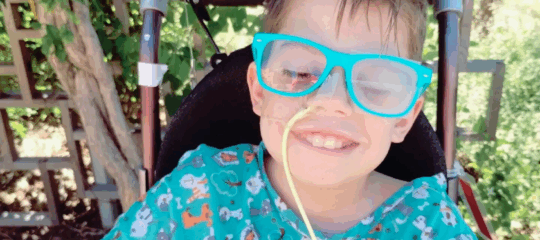
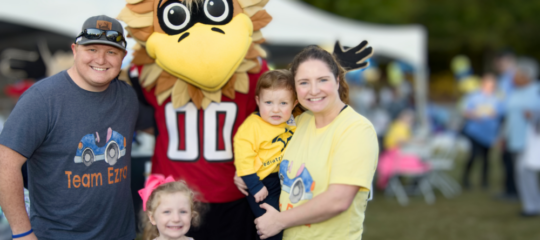
One mother shares her perspective about pediatric brain cancer's impact on the entire family.